Home
/
Fish species
/
Arulius Barb
Arulius Barb
Origin
India
Habitat Size
12cm
Water Type
Fresh Water
Water Temperature
10º-20ºC
Cost in India
₹3,000 - ₹8,000
Size
10 - 12 cm (Small)
Diet
Omnivore
Quick Information
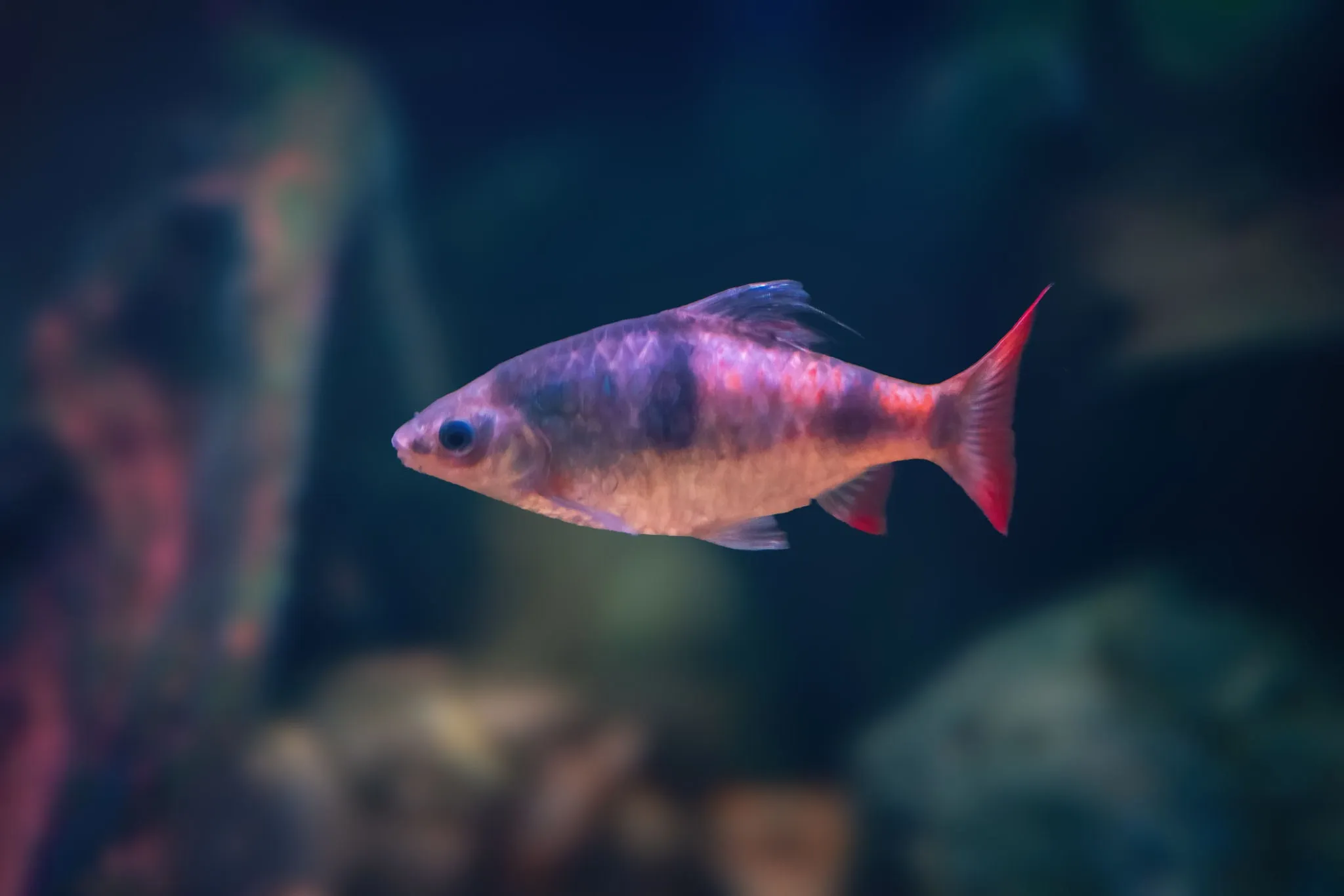
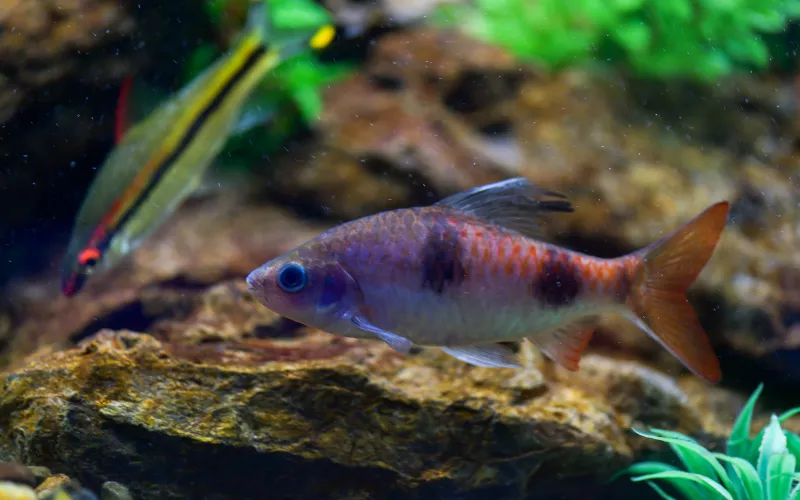
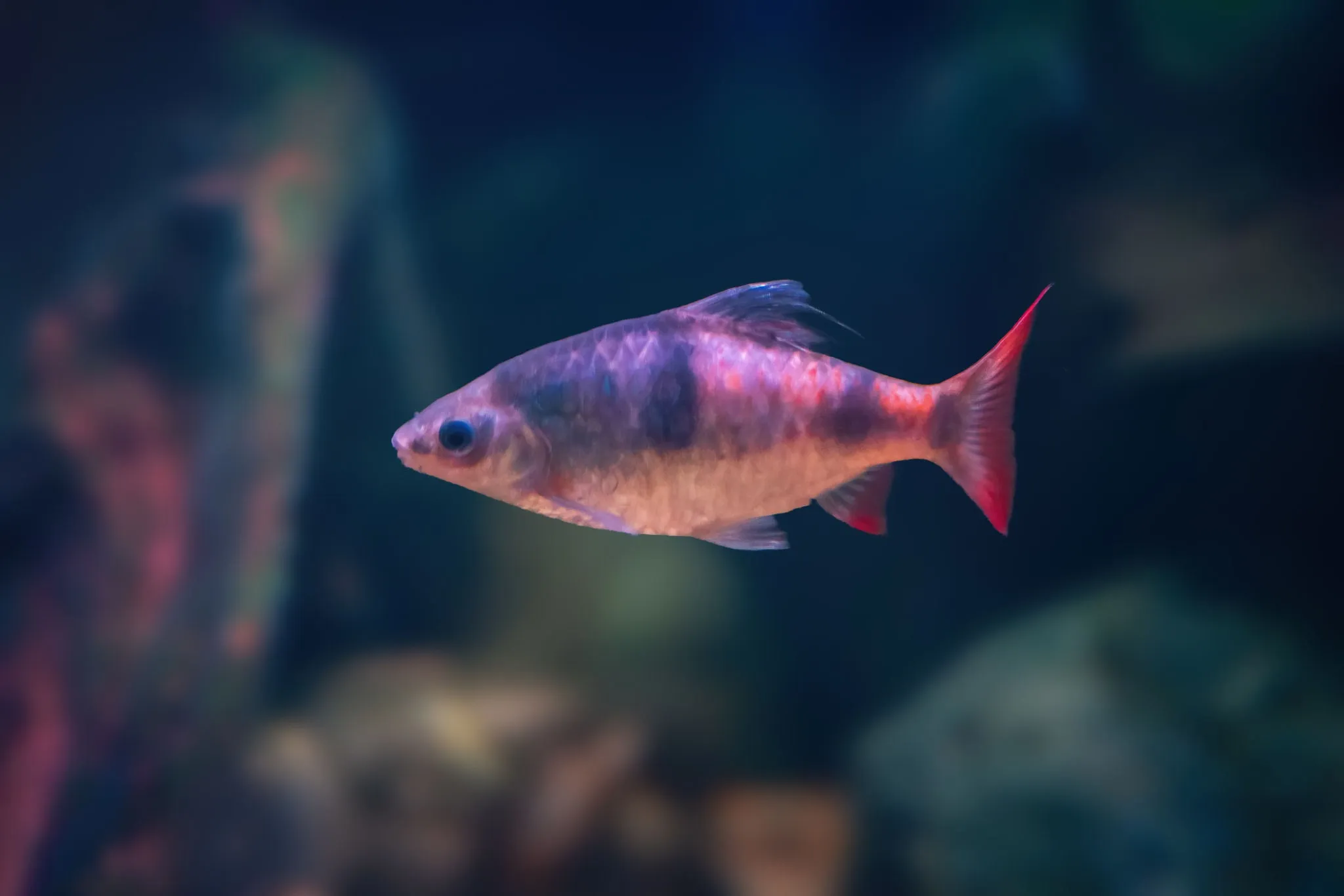
Adult fish are dark brownish olive on the back, becoming lighter on the sides to white on the ventral surface. It has a black, vertical blotch in the middle of its body, above the origin of its pelvic fin. It has a second black, vertical blotch above its anal fin, and a third black bar or blotch on the base of the caudal fin, though less well defined as the other two blotches. The fins are thin and transparent or translucent. Adults possess more pronounced colors than the juvenile. The adult male differs from a closely related filament barb species found in Tambraparni River basin, Dawkinsia tambraparniei, and lacks the filament-like extensions to the branched dorsal-fin rays which lend to the incorrect use of the common name, longfin barb (Dawkinsia filamentosa). It reaches an adult size of 12 centimetres (4.7 in) T
Characteristics
Temperament
Aggressive
Friendly
Compatibility with other fishes
Not Friendly
Super Friendly
Habitat Size
Small
Large


Habitat
Initial Setup Cost
₹3,000 - ₹6,000
Water Temperature
10º -20ºC
Water Type
Fresh Water
PH Level
5 - 9
Adult fish are dark brownish olive on the back, becoming lighter on the sides to white on the ventral surface. It has a black, vertical blotch in the middle of its body, above the origin of its pelvic fin. It has a second black, vertical blotch above its anal fin, and a third black bar or blotch on the base of the caudal fin, though less well defined as the other two blotches. The fins are thin and transparent or translucent. Adults possess more pronounced colors than the juvenile. The adult male differs from a closely related filament barb species found in Tambraparni River basin, Dawkinsia tambraparniei, and lacks the filament-like extensions to the branched dorsal-fin rays which lend to the incorrect use of the common name, longfin barb (Dawkinsia filamentosa). It reaches an adult size of 12 centimetres (4.7 in) T
Essential Equipment
Aquarium tank
Water filter
Heater
Light
Nutrition
Avg Monthly Expenses
₹3,000 - ₹ 8,000
Though less common to the hobby than other related barbs, this peaceful, active, egg-laying fish is compatible with other related species in the home aquarium such as tiger barbs (Puntigrus tetrazona), and rosy barbs (Pethia conchonius) and other fast swimming cyprinid species of similar size. Also compatible with some cichlid species, but smaller fish such as neon tetras would be at risk of predation. As with many barbs, nippy behavior is common, but alleviated by keeping the fish in numbers of at least 5–6 individuals in the aquarium, while taking into account the space requirements of the adult size of 4–5 inches (10–12 cm).


Health
Common Health Issues
Fin rot
Fungus
Ich (white spot disease)
Hole in the head disease
Fungal infections
Signs of good health
Bright coloration
Active
Good apetite
Signs of sickness
Loss of appetite
Swimming abnormally
Reduced activity
Swollen abdomen
Yellowish-brown spots on the skin
Chewed on or eaten-away gills or fins
Hemorrhaging of internal organs, skin, and muscle
Though less common to the hobby than other related barbs, this peaceful, active, egg-laying fish is compatible with other related species in the home aquarium such as tiger barbs (Puntigrus tetrazona), and rosy barbs (Pethia conchonius) and other fast swimming cyprinid species of similar size. Also compatible with some cichlid species, but smaller fish such as neon tetras would be at risk of predation. As with many barbs, nippy behavior is common, but alleviated by keeping the fish in numbers of at least 5–6 individuals in the aquarium, while taking into account the space requirements of the adult size of 4–5 inches (10–12 cm).
Prerequisites for a Fish
Adequate tank space
Financial Capability
Frequently Asked Questions
How do you take care of an arulius barb?
The arulius barb should take to a wide range of aquarium foods. These fish in the wild feed on a range of foods including plant, insect, and protein matter o giving them a varied diet would be great. The ideal diet would be a good quality pellet or flake food, supplemented with frozen bloodworms or black worms
How big do barb fish get?
The tiger barb can grow to about 7–10 centimeters (2.8–3.9 inches) long and 3–4 centimeters (1.2–1.6 inches) wide, although they are often smaller when kept in captivity. Some can grow to around 13 centimeters as well. Native fish are silver to brownish yellow with four vertical black stripes and red fins and snout.
Are all barbs aggressive?
Tiger barbs are particularly aggressive fin nippers and therefore should not be kept with any more timid or long finned species. Tinfoil barbs are not aggressive by nature but due to their size should not be kept with small fish species which would fit into their mouth and be swallowed.
What do barb fish eat?
Most barbs are omnivorous and will thrive on Aqueon Tropical Flakes, Color Flakes, Tropical Granules and Shrimp Pellets. Frozen and live foods can also be fed as treats or to help induce spawning. For best results, rotate their diet daily and feed only what they can consume in under 2 minutes, once or twice a day.